
Dry weather & expensive inputs
Some better weather conditions for winter ploughing started us off well. Following the challenges of Covid, then the unexpected Russia invasion of Ukraine added world uncertainty, and reminded us of our reliance on Russian gas & oil. Inflation hit – fertiliser rose from £260/t to £800/t, diesel from £0.60/L to £1.10/L, electricity from 13p/kWh to 85p/kWh and shocked world markets. A cool and dry spring (38mm March, 10mm April) followed and allowed spring cultivations and drilling to go well. Other than a couple of singular rain events it remained dry and irrigation was busy. The wind turbine had its main bearing go, and was out of action for 6 weeks, but temperatures improved and we had great sunlight levels. Generally, crops grew well, with little pest and disease issues, but did lack rainfall. Following a hot July (40C), combining was early and dry and the reservoirs were empty. The dry conditions continued allowing an uninterrupted potato harvest. Wheat drilling for 2023 went in excellent soil conditions, with good soil temperatures giving rapid emergence. Rented out veg land was cleared on time and we followed up close behind with autumn cultivations. Sugarbeet harvest was completed at the end of October, with no ruts in the field! Input costs continue to be crazy, cashflow is tight, and the cost-of-living increases for all.
Vining Peas
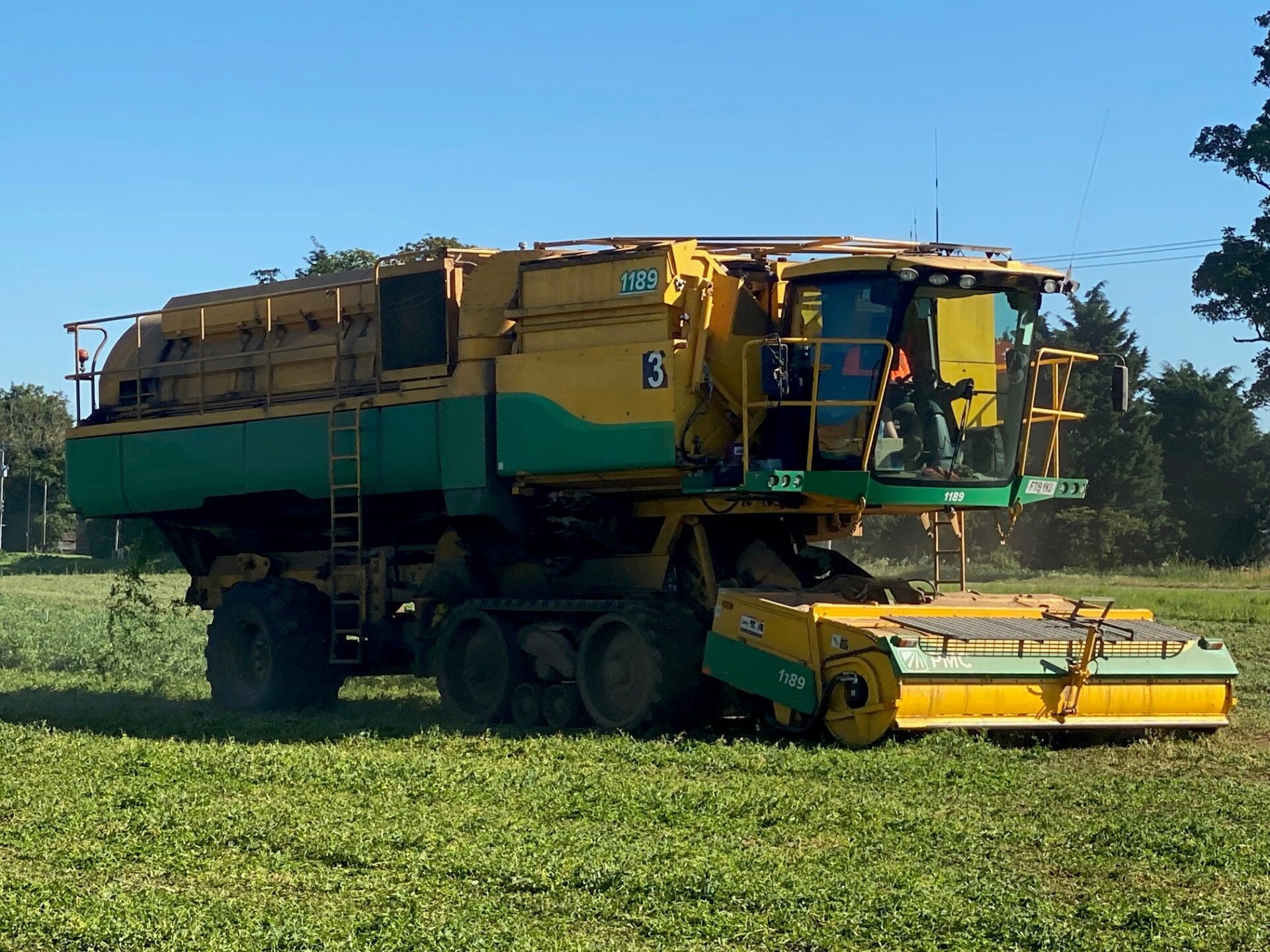
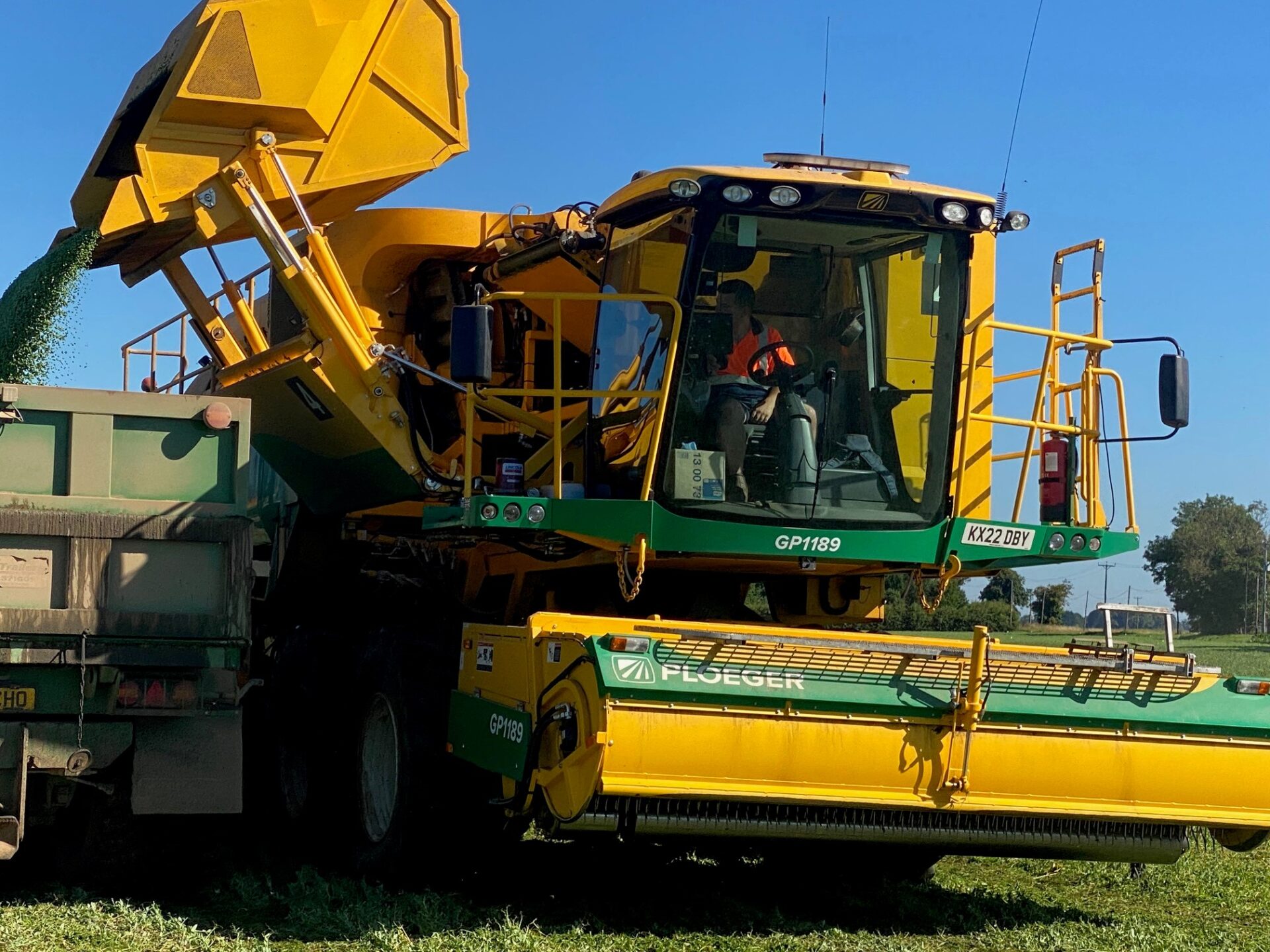
We had 3 main drill periods for the HMC Group campaign; early, middle, and then late, with this late drill period being the very last fields to harvest. The cooler and dry conditions meant spring pea growth was slow, and there was a relentless attack by pigeons. The middle lot of peas grew well, and the late peas lost potential by the extreme heat we had in late July – even trying irrigation did not help. Overall, our performance was just below the Groups average, which is a little disappointing.
Winter Wheat
Combining started on 26th July and finished on 6th August – our earliest ever start and finish. Yield were above average due to the good establishment in autumn 2021 and good light levels in June/July 2022. Farm average was 13.0t/ha, with all varieties performing. This is our 2nd highest ever farm average (2015 = 14.03t/ha). Moistures were good and no drying was needed. Specific weights were good (good weather at grain fill period in June), but protein levels were low due to lack of rainfall and nutrient mobilisation. Sale price has varied £145/t (sold forward in Dec ‘21) to £301/t (sold forward in Jun ’22), average about £260/t.
White Mustard
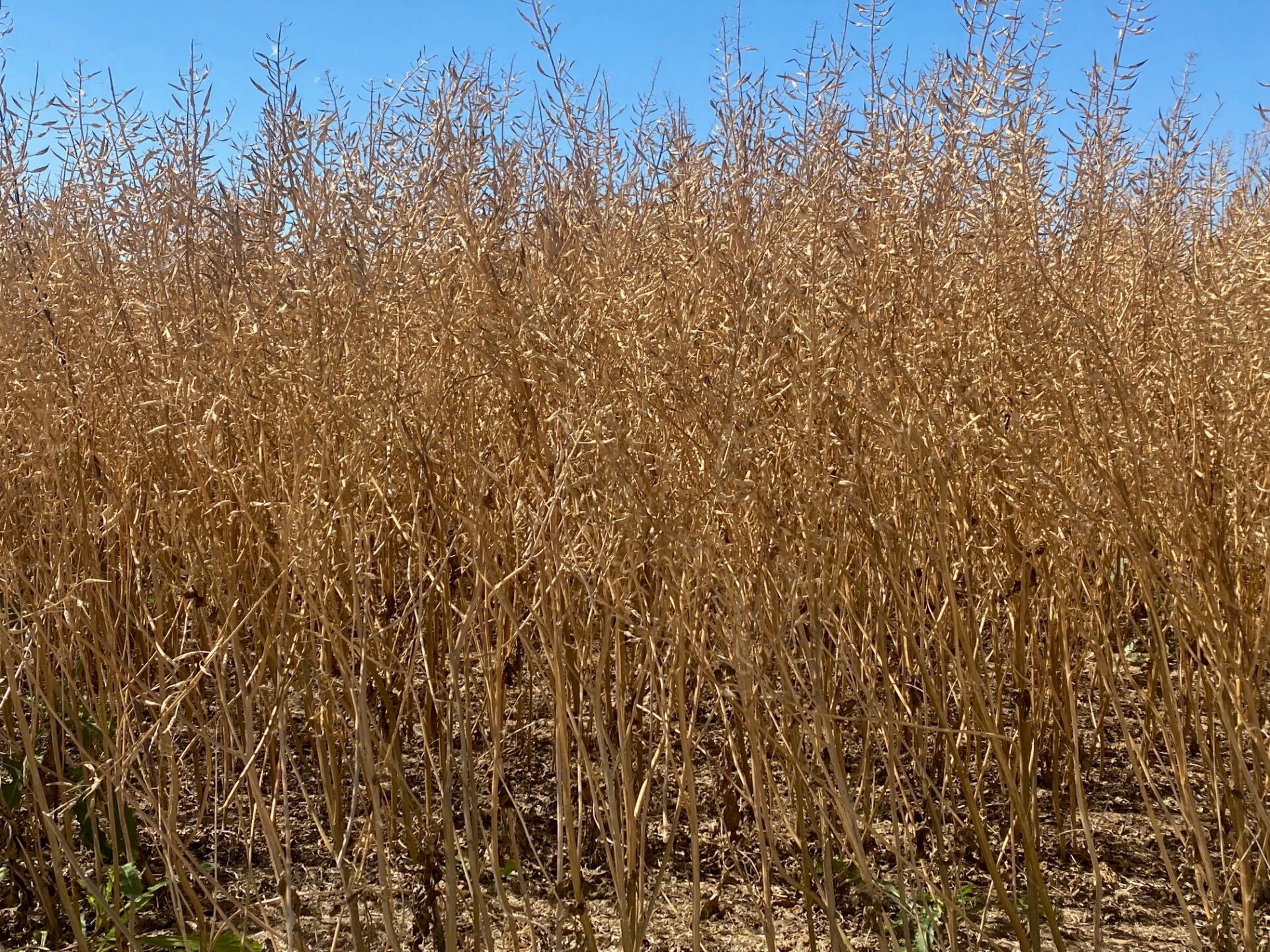
The crop struggled in the dry and cool spring to grow away from flea beetle and pigeon attack, but we did get good plant establishment which helped. The weather made the crop branch early, and generally it was 30-40cm shorter than usual, and so losing out on some height and therefore yield. The harvest was generally clean and dry, with yields being better than the previous 2 years, but still only 0.9t/ha, against a budget of 1.6t/ha.
To help mitigate the risk of growing the crop in the Spring we are trying 2x8ha fields with a new over wintered variety called Guthrie that Elsoms have bred, harvest expected late July.

Potatoes
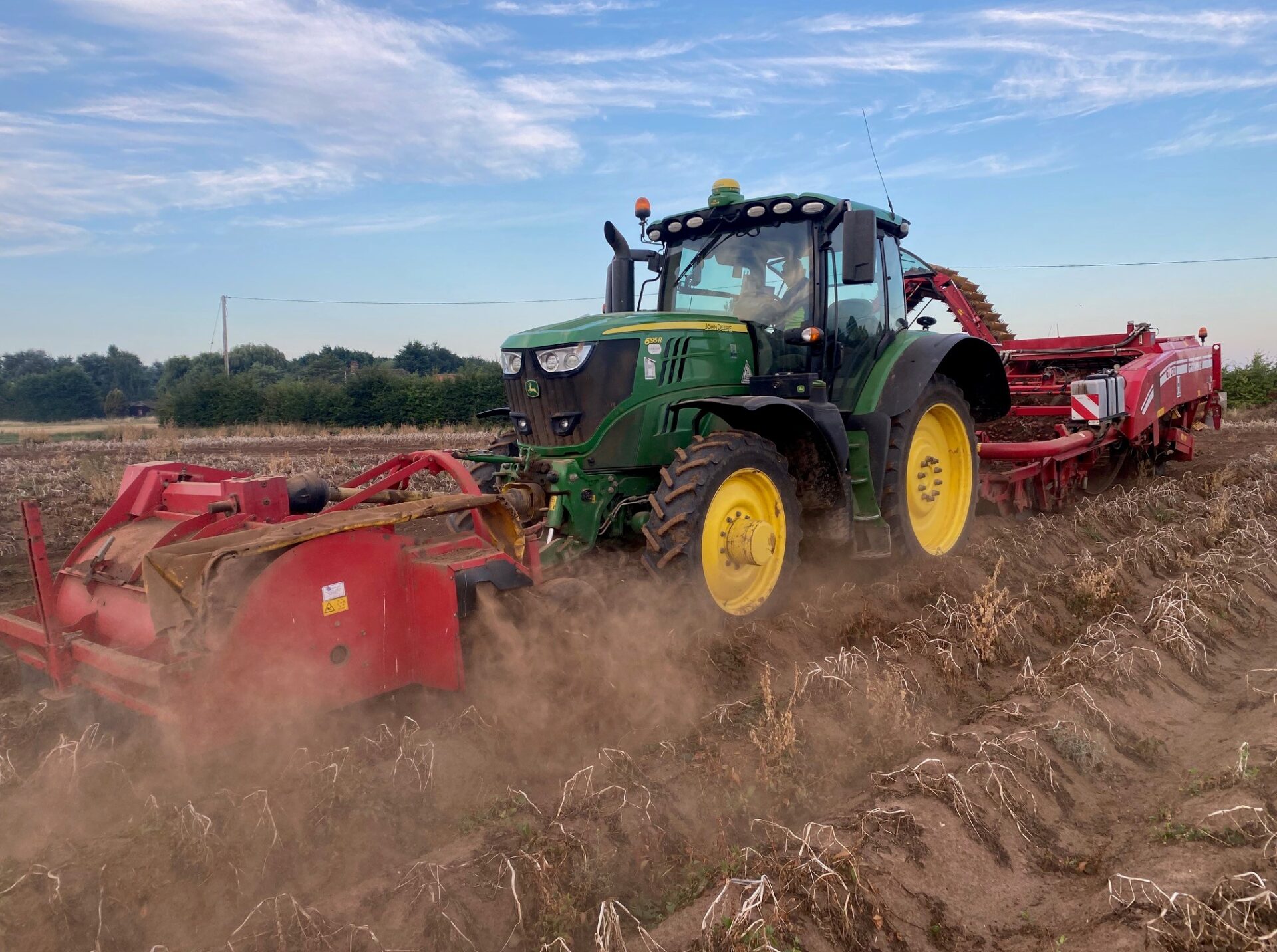
Soil conditions at planting were good, and as the plants grew tuber numbers looked good. The dry conditions meant we were very busy irrigating for 10 weeks – running out of water at Ferry Farm 3 weeks early, and running out at Monmouth Farm at the end. Both reservoirs are empty. 60% of our crop was irrigated and performed well (48t/ha), but localised rain events meant that some unirrigated fields performed very well considering (45t/ha) and others that missed the rain did not (26-30t/ha). Overall we lifted the 4,600t over 22 days, averaging 46t/ha. Quality on the whole looks good, but there were a few issues with bruising from the dry harvest period. 70% of the crop was pre-sold on Contracts (agreed Nov-Dec ’21), and with current electricity prices, even with the welcomed government price cap, our electricity cost has still x3, and will roughly cost us an additional £37/t which the customers are not yet supporting. Our planted area for 2023 will be 40% less.
Sugarbeet
The crop emerged in the fields in direct relation to moisture – very uneven which can then cause issues for weed and pest management. We irrigated where we could (60%) to help the non-germinated seeds to grow and that worked well. We did not use the temporary derogation of neonicotinoid seed treatments due to the following crop restrictions (no flowering crop allowed to be grown in that field for 30 months), and fortunately aphid pressure which cause Virus Yellows was not too bad. The lack of rain reduced yield to 76t/ha, roughly 10t/ha below our 5 year average.
British Sugar (negotiated by NFU Sugar) are paying £40/t for 2023 beet (up from this year’s £23/t) to try and meet their needs from customers….a great result from NFU Sugar, and so we will continue to grow sugarbeet as existing area levels.
Renewable Energy
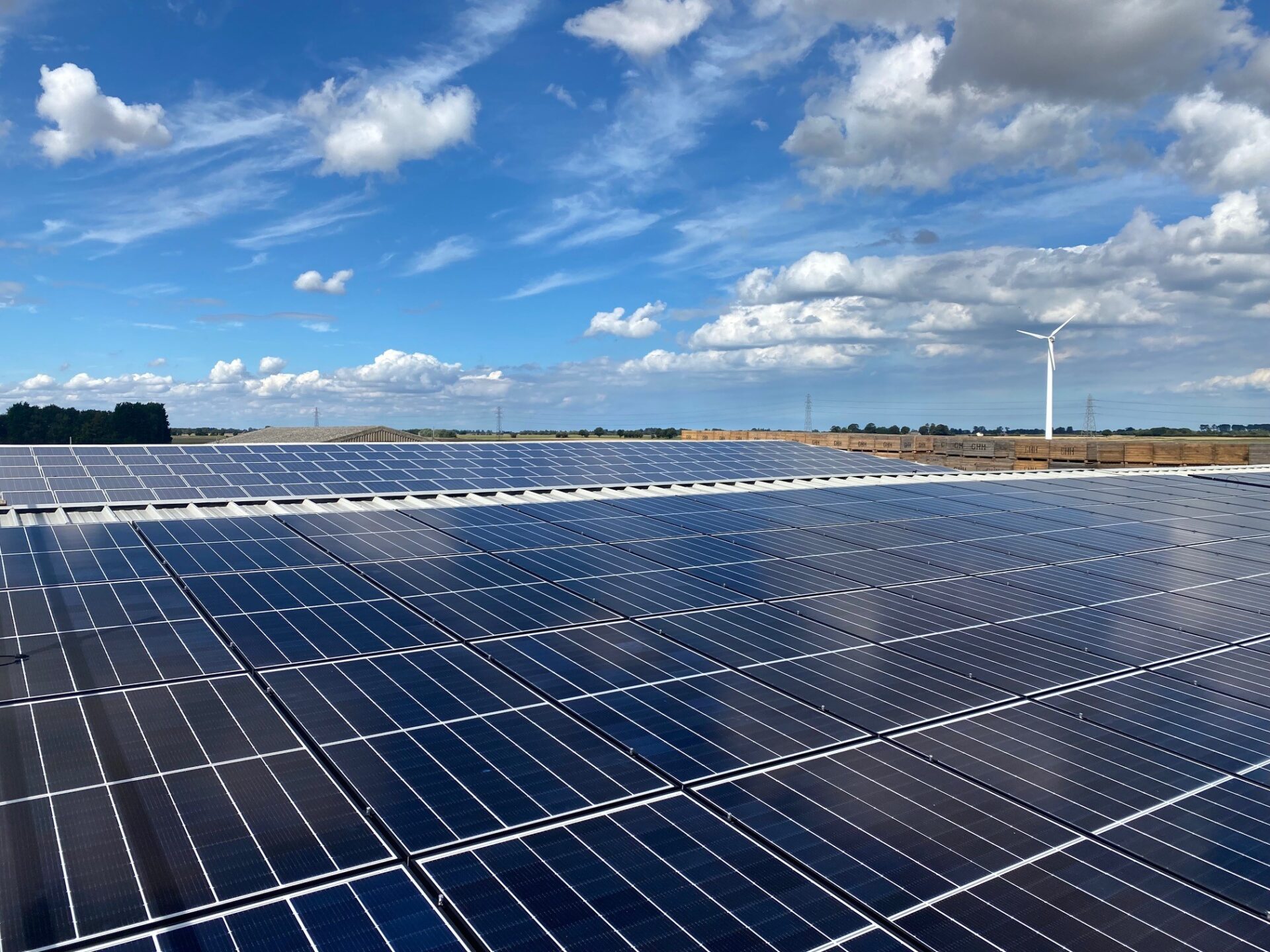
The good light levels in the summer meant that solar PV performed well, with 2022 being our 2nd highest solar levels ever, only beaten by 2015. With the high pressure over the UK for a lot of the summer then wind levels were lower, so the wind turbine produced less energy than usual. This was exasperated by the failing of the blades main housing bearing, it was out of action for 6 weeks and needed an 80 tonne crane in to repair it!
We installed a further 76kW (198 x 385W panels) of solar to Monmouth coldstore roof in September to help be more energy self-sufficient.
Water Management
With both reservoirs (18m gallon & 5m gallon) are empty and we need some significant rainfall to get the drains and dykes running again to then be able to abstract and fill.
We were successful in our RPA reservoir grant application for an additional reservoir at Ferry Farm.